

Colavecchio & Colavecchio
Simultaneous Filing of I-130 and I-485: Pros and Cons
- Competitive Prices
- High Success Rate
- Expert Lawyers
- Customer Centric
Book Your Consultation
We are Proud Members of the Following

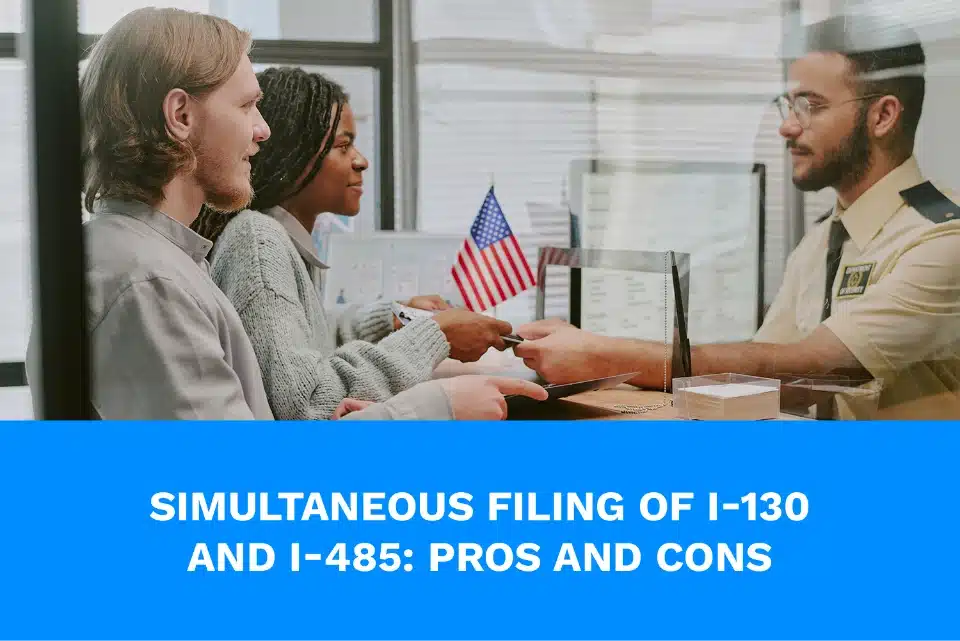
For families seeking to live together in the United States, the immigration process can be overwhelming. Two of the most critical applications are Form I-130 (Petition for Alien Relative) and Form I-485 (Application to Register Permanent Residence or Adjust Status). Many people wonder if it’s possible and wise to file both forms simultaneously. This is known as concurrent filing, or the simultaneous filing of Form I-130 and Form I-485. But is concurrent filing always the right choice? Let’s explore what these forms mean, who qualifies, and the pros and cons of filing concurrently so you can better understand this part of the green card process.
Understanding the Two Forms: I-130 & I-485
What are these two forms, and why are they important in your immigration process? Let’s understand.
Form I-130 (Petition for Alien Relative)
This form is filed by a U.S. citizen or lawful permanent resident (also known as a green card holder) to establish a qualifying family relationship with a foreign national. It demonstrates that the intending immigrant is eligible for an immigrant visa petition under the Immigration and Nationality Act.
Form I-485 (Application to Register Permanent Residence or Adjust Status)
This form is filed by the intended immigrant when they are physically present in the United States with a legal entry (inspected and admitted or paroled). It allows the applicant to adjust status to lawful permanent resident status. This step leads directly to obtaining a green card and permanent residence.
IMMIGRATION LAW
OFFICE HOURS
Mon: 9:00 AM - 3:30 PM
Tue: 9:00 AM - 3:30 PM
Wed: 9:00 AM - 3:30 PM
Thu: 9:00 AM - 3:30 PM
Fri: 9:00 AM - 3:30 PM
Sat: Closed
Sun: Closed
When Can You File I-130 & I-485 Forms Simultaneously?
You can file concurrently only when an immigrant visa number is immediately available. That’s why this option mainly applies to:
- Immediate relatives of U.S. citizens (spouses, unmarried children under 21, and parents). For these relatives, a visa number is always available.
For preference relatives of U.S. citizens and most relatives of lawful permanent residents, concurrent filing is not available until their priority date becomes current on the Visa Bulletin.
Pros of Concurrent Filing I-130 & I-485
Here are some of the pros of simultaneous filing of I-130 and I-485 for your immigration process.
1. Saves Time in the Immigration Process
Usually, applicants must wait for the I-130 approval before submitting the I-485. With concurrent filing, both forms are reviewed simultaneously, which can reduce the wait for lawful permanent residence.
2. Access to Work and Travel Benefits
Applicants who file concurrently can also apply for employment authorization (Form I-765) and advance parole (Form I-131). It lets them legally work in the U.S. and obtain a travel document to leave and return while the status application is pending. Keep in mind that if you travel without Advance Parole, USCIS may consider your status application abandoned (exceptions exist for certain visas, such as H-1B and L-1).


3. Avoids Consular Processing
By filing the adjustment of status in the U.S., applicants don’t need to go through consular processing abroad, which often means less travel, fewer delays, and more time with family members.
Cons of Concurrent Filing of I-130 & I-485
Though simultaneous filing has a lot of benefits, there are some downsides.
1. Higher Upfront Costs
Filing both forms at once requires paying both filing fees together. On top of that, there are costs for the medical examination, biometrics appointment, and often legal help from an immigration attorney or immigration lawyer.

2. Risk if the I-130 Is Denied
If USCIS denies the petition for alien relatives, the I-485 will automatically be rejected. This denial could leave the intending immigrant without a valid immigration status and potentially put them at risk of removal proceedings.
3. Complicated Evidence Requirements
Concurrent filing usually means submitting a large packet of supporting documents at once — such as a marriage certificate, birth certificates, joint bank statements, recent pay stubs, vaccination records, and more. Missing or incomplete documents can result in delays, Requests for Evidence (RFEs), or denials.
4. Not Available for Everyone
Preference relatives, special immigrant juveniles, and many categories of lawful permanent residents’ family members must wait until their priority date is current. Filing too early leads to rejection.
Simultaneous Filing Process of I-130 & I-485
If you qualify and decide to file concurrently, here’s what the immigration process usually looks like:
- Prepare and complete Form I-130 and Form I-485 together.
- Collect necessary forms and supporting documentation:
- Marriage certificate (if based on marriage).
- Birth certificates.
- Joint bank statements, pay stubs, and other proof of family relationship.
- Medical examination and vaccination record.
- Include applications for employment authorization and advance parole if desired.
- Submit everything to only USCIS, with the correct filing fee and mailing address.
- Receive receipt notices for each form.
- Attend a biometrics appointment for fingerprints and photos.
- Wait for a USCIS interview, where the officer may test the truth of the family relationship or other eligibility factors.
- If all goes well, USCIS approves the immigrant petition and the status application, granting lawful permanent residence.
Role of Legal Help in Simultaneous Filing
Because immigration laws and procedures are complex, many families choose to work with an immigration attorney. Legal guidance is especially valuable if:
- You’re unsure about the difference between adjustment of status and consular processing.
- You previously overstayed a non-immigrant visa or have issues with lawful status.
- You’re concerned about possible removal proceedings.
- Your case involves an abusive spouse or a complicated immigrant category.
An experienced immigration lawyer can help avoid mistakes, prepare for your USCIS interview, and ensure your immigration status is protected during the process.
Final Thoughts: Filing I-130 & I-485 Simultaneously
The pros and cons of simultaneous filing of I-130 and I-485 indicate that while concurrent filing can expedite the green card process, it also carries risks if something goes wrong. Eligibility, financial readiness, and strong documentation all play crucial roles in achieving success.
If your immigrant visa number is available and your immigrant petition is strong, filing concurrently can be one of the most efficient ways to achieve permanent resident status. But if your case has complications, talking to an immigration attorney is the safest path.
With patience, careful filing, and the right legal help, many families successfully achieve lawful permanent residence and begin life together in the United States.
Contact Colavecchio & Colavecchio Law for Fiance Visas
Need help filing for I-130 and I-485? Colavecchio & Colavecchio Law can help! Reach out to our immigration lawyers who will review your case, walk through your documents, and help you file with confidence and strategy.
Our experienced attorneys offer immigration law services to help you sail through your immigration process. Contact us today to schedule a consultation with our immigration attorneys.