

Colavecchio & Colavecchio
List of Documents Needed for Family Visa Processing
- Competitive Prices
- High Success Rate
- Expert Lawyers
- Customer Centric
Book Your Consultation
We are Proud Members of the Following
Applicants can initiate family visa processing by gathering primary identity documents, birth certificates, and marriage records for submission to USCIS or the National Visa Center. Compiling this comprehensive evidence package verifies your qualifying relationship, fulfills strict financial sponsorship criteria, and advances your case toward the final interview stage. You should consult a licensed immigration attorney to obtain a customized document checklist tailored to your specific family visa category.

What is a Family Visa?
A Family Visa is an immigration permit that allows family members of a citizen or permanent resident to join them in a specific country. This visa is often designed to unite families by permitting spouses, unmarried children, parents, or sometimes extended relatives to live together.
Eligibility criteria and application processes vary by country, but they usually include proof of a relationship, financial stability, and sometimes background checks. Depending on the nation’s immigration policies, Immigrant Visas can lead to permanent residency or citizenship.
They are crucial in facilitating family reunification and ensuring loved ones can support each other in a new environment.
What Are the Benefits of A Family Visa?
A Family Visa provides essential pathways for family members to reunite, fostering emotional support and stability. It allows loved ones to share their lives in a new country, enhancing their quality of life. Here are some key benefits of obtaining a Family Visa:
- Reunification: Enables families to live together.
- Access to Services: Beneficiaries often gain access to healthcare and education.
- Work Opportunities: Family members may have the right to work in the host country.
- Pathway to Residency: This can lead to permanent residency or citizenship.
- Cultural Integration: Helps families adjust and integrate into a new culture together.
Completed Form I-130 (Petition for Alien Relative)
Form I-130, officially known as the Petition for Alien Relative, is a document used by U.S. citizens and lawful permanent residents to establish a qualifying relationship with a foreign national relative who seeks to immigrate to the United States.
The form aims to demonstrate a genuine family connection, which is essential for a relative to be eligible for an immigrant visa or green card. Petitioners must provide detailed information about themselves and their relatives, including proof of citizenship or residency and evidence of the familial relationship, such as birth certificates or marriage licenses.
Once the I-130 form is approved by U.S. Citizenship and Immigration Services (USCIS), the foreign relative can proceed with the immigration process, which may involve applying for a visa or adjusting their status. Form I-130 is a critical first step in legally bringing family members to the U.S.
Proof of U.S. Citizenship or Permanent Residency (Petitioner)
When petitioning to bring family members to the U.S. as immigrants, either a citizen or a lawful permanent resident (Green Card holder) must petition. If a Permanent Resident Card applicant petitions, he or she must demonstrate that he or she meets the income requirements by filing Form I-864 with USCIS.
The form requires the sponsor to demonstrate a qualifying family relationship with the beneficiary and meet all other visa requirements (e.g., valid passport and photo requirements).
Furthermore, petitioners must show they meet the minimum income thresholds defined by the Federal Poverty Guidelines for their category (for instance, the married son or daughter of a green card holder must meet a higher threshold than the single child of a green card holder).
Learn more about getting a Green Card and working in the USA.

Birth Certificates (Petitioner & Beneficiary)
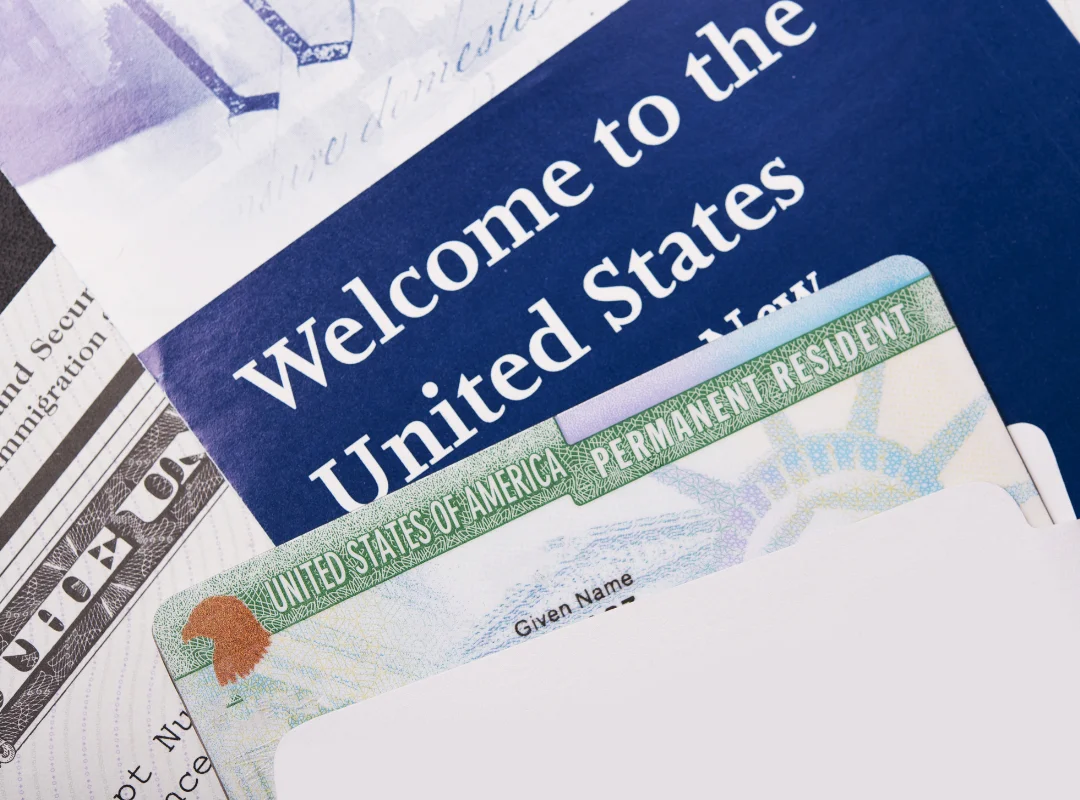
Every family-based green card applicant must submit their birth certificate as part of the application, but other forms of evidence, such as religious records, school transcripts, medical documents, or census records, may also be submitted as proof.
For additional guidance regarding what documents might be readily available in their country of origin, visit the State Department website. If you cannot obtain your birth certificate, contact the vital records office or government agency in your country of birth to request a statement of non-availability for visa application purposes.
This statement should verify that an original birth certificate is unavailable and list any alternatives or similar records at the time and place of your birth. Providing proof that they share a legal father is also required. A marriage certificate for both parents or other documentation from civil authorities should also be included with any application for sibling claims.

Marriage Certificate (for Spousal Visas)
Marriage certificates are required when applying for certain family visa types, particularly for a spousal visa (Form I-130). Furthermore, if both you and your spouse live abroad, copies may also be requested prior to a visa interview at a U.S. Embassy or Consulate.
Your marriage certificate can be obtained from the office of vital records in the state or country where your ceremony was performed, or through certified translation services such as MotaWord.
USCIS requires additional evidence of your marriage in addition to an official certificate. This may include joint bank account statements, insurance documents, and photos showing both partners together. Even if neither partner currently lives together, this won’t prevent the National Visa Center from processing their application if you can demonstrate a strong relationship over time.
Proof of Legal Termination of Prior Marriages (if applicable)
Family preference categories for visa consideration include:
- Siblings
- Married sons and daughters aged 21 or over who have not remarried
- Brothers and sisters of U.S. citizens, spouses, and minor children of LPRs.
Each year, there are limited quotas available, and these visas are highly sought after. Prior to filing their applications in these categories, applicants who have had previous marriages will need proof that their prior unions were legally ended, either through divorce, annulment, or abandonment. This may require providing documents to prove it.
Affidavit of Support (Form I-864)
The Affidavit of Support (Form I-864) is a legally binding agreement between a sponsor and an intending immigrant that states the sponsor agrees to financially support the intending immigrant so as not to become a public charge.
Sponsors must present proof that their household income exceeds 125% of the Federal Poverty Guidelines for their family size, whether that person is the petitioner or a joint sponsor.
Sponsors must also provide an address where they can safely receive immigration notices, and in Part 3 they should list and provide information on each family member they are sponsoring for US citizenship.
Conclusion
Navigating the family visa process requires careful preparation and understanding of the essential documentation needed to support your application. The family visa serves as a vital pathway for loved ones to build their lives together, reinforcing the emotional bonds and support systems that are essential for thriving in a new environment.
Get Family Green Card | Colavecchio & Colavecchio Law
Fulfill your future with expert immigration assistance. We can help you get a green card and work in the USA to obtain the best financial stability.
At Colavecchio & Colavecchio Law Office, we specialize in Green Card applications, Provisional Waivers (I-601A), Marriage-Based Green Card, and more. Let our experienced team guide you through every step of your journey. Contact us today to start making your American dream a reality!
Frequently Asked Questions
1. What is Form I-130?
It is the initial legal petition filed by a U.S. citizen or green card holder to establish an eligible family relationship with a foreign relative.
2. How much does it cost?
Filing Form I-130 costs $625 if you submit it electronically online, or $675 if you choose to mail a physical paper application.
3. Which civil documents are mandatory?
You must submit official birth certificates, legal marriage certificates, prior divorce decrees, and clear proof of the sponsor’s U.S. citizenship or green card status.
4. Is a financial sponsor required?
Yes, the petitioner must submit Form I-864 to promise financial support and prove their income exceeds 125% of the Federal Poverty Guidelines.
5. Does it grant legal status?
No. An approved I-130 does not grant a green card, work permit, or lawful U.S. status; it only permits you to apply for them.